The False Dichotomy: Why the "Climate vs. Development" Debate is a Dangerous Delusion in 2026
The air in November 2026 has a familiar, stifling weight. As we chew over the latest UNEP Emissions Gap Report (2026), the reality isn't a forecast anymore—it’s our balance sheet. The report confirms a brutal truth: we've lost the chance to keep warming under 1.5°C without a massive overshoot. In fact, central warming estimates for 2100 have jumped 0.2–0.3°C higher than last year's projections. This shift was fuelled by a surge in 2035 NDCs and the massive geopolitical hole left by the US pulling out of the Paris Agreement.In all this chaos, a tired, debunked argument has crawled back into the light. Bjorn Lomborg, President of the Copenhagen Consensus Center, has doubled down on his claim that the "core problem" of global development is opportunity cost. His pitch is simple, even seductive: he says every dollar we spend on solar subsidies or carbon tracking is a dollar "stolen" from vaccines, nutrition, or basic roads.
As we trudge through the end of 2026, this "either-or" logic isn't just old-fashioned. It’s a fantasy. To suggest we have to pick between a child’s schooling and a stable climate ignores the facts on the ground. Climate change is the very thing currently tearing down schools, hospitals, and pipes.
1. The Cost of Inaction: 2026’s Economic Reality Check
Lomborg’s logic treats climate spending like a luxury for the rich. But 2026’s data on economic wreckage tells a different story. We aren't arguing about future costs. We're paying the bill right now. The Allianz Climate Risk Tracker (2026) shows these losses come from falling labour productivity, people missing work, and factory shutdowns.
| Region/Country | Event (2025-2026) | Economic Impact (% of GDP / Absolute) |
|---|---|---|
| Jamaica | 2025 Extreme Weather | 39.4% of GDP |
| Germany | 2026 Heat Waves | €25 Billion (Loss in productivity) |
| Italy | 2026 Heat Waves | €28 Billion |
| South Sudan | 2025 Climate Shocks | 5.2% of GDP |
| Europe (Total) | 2026 Heat Waves | €113 Billion |
When a single heatwave burns €25 billion off Germany’s economy, that’s money that can't go into social safety nets.
 Climate change isn't just a line item in a budget. It’s a **macro-economic anchor** that drags down the fiscal room needed to fund the "traditional development" Lomborg claims to want.
2. The India Case: Why Green Industry is Welfare
Nowhere is the friction between immediate needs and green growth more intense than in India. The country has taken heat for its aggressive green manufacturing deals, like the Production Linked Incentive (PLI) programme. Critics say this cash should've been handed out as direct welfare or used for rural poverty.
But a 2025 study by economist Mathias Larsen shows India’s play is smarter than a simple trade-off. By using state firms to take on the risk, India has kept direct spending low while locking in its energy future. The point isn't just "being green"—it’s about energy security and economic sovereignty.
- The Turning Point: India’s National Action Plan on Climate Change (NAPCC) has stopped seeing carbon cuts as a burden. Instead, they've started chasing co-benefits.
- The Health Dividend: Look at Bangladesh. Investing in climate-tough, arsenic-free water systems—usually called "adaptation"—has directly cut heart disease. That’s not a distraction from health; it’s a health strategy that keeps the workforce standing.
Lomborg often attacks expensive mitigation (like solar subsidies) to favour adaptation. But in 2026, you can't have one without the other. Without cutting emissions, the cost of fixing the damage becomes infinite.
3. Education and Health Can't Survive in a Climate Vacuum
The biggest hole in the "opportunity cost" logic is the idea that human capital is somehow safe from the planet's health.
- Schools Under Water: Save the Children reports that 1.3 billion school-age kids live in areas hit hard by climate hazards. Floods don't just "divert" money; they physically erase schools.
- The 0.03% Statistic: Here's the catch: only 0.03% of climate finance actually goes to education. This doesn't mean we should take money away from climate. It means we have to re-think and merge climate cash with human services. We need schools that double as cooling centres and hospitals that stay on when the grid buckles under 2026’s heat.
 Research Image
4. The Geopolitical Hole and the Finance Gap
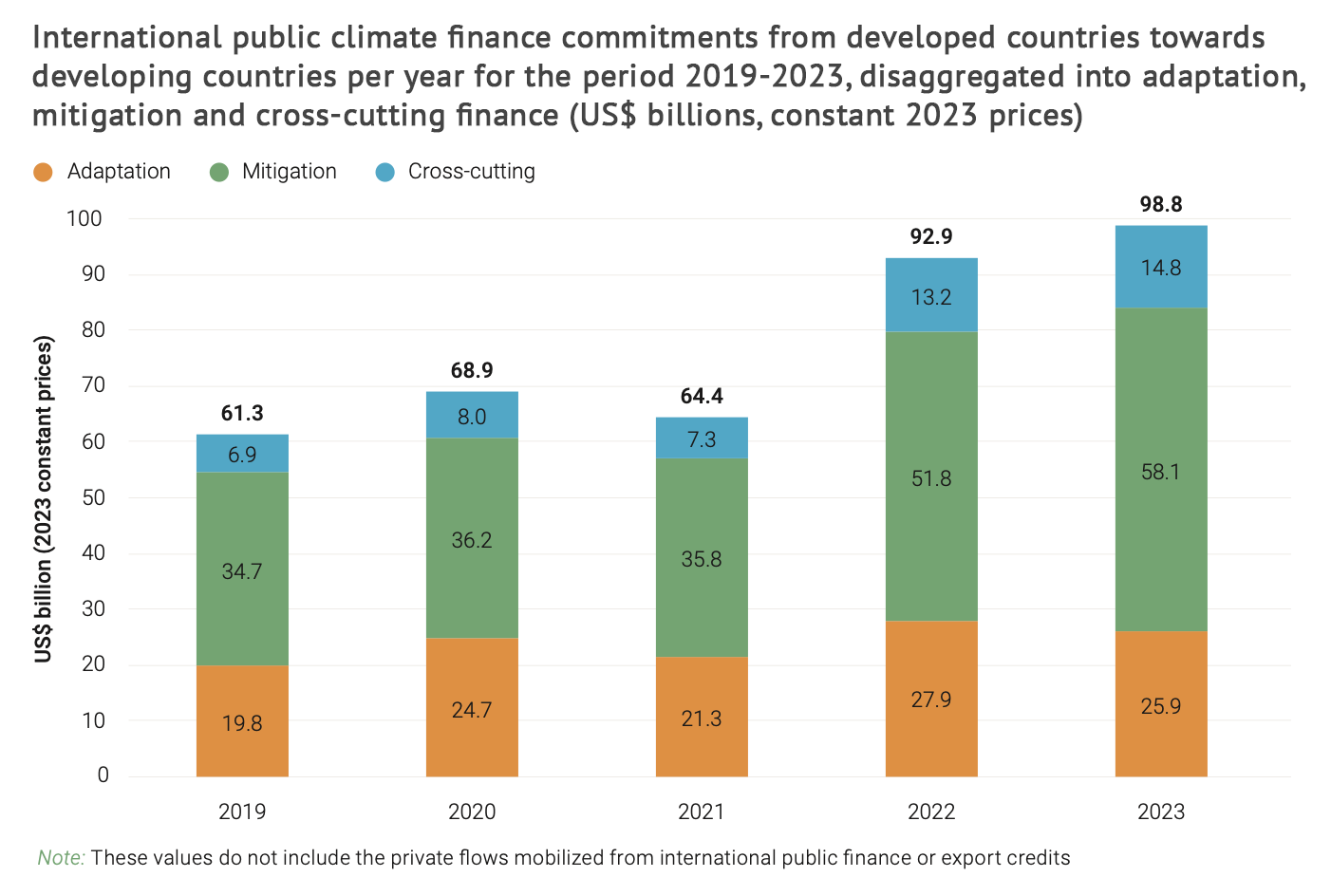
The UNEP 2026 report is blunt: to hit the 2°C target, global emissions have to drop 11% by 2030. But the US exit from the Paris Agreement has left a massive hole in the wallet. While private investors are trying to step in, "global uncertainty shocks" (Perera, 2026) are making green money jumpy.
Carbon pricing has hit a milestone, covering nearly a third of global emissions and pulling in $107 billion in 2025. Still, the gap is massive. If we listen to the advice to pause climate spending to focus on "normal" development, we’re just building hospitals in flood zones and schools in the path of fires. The cost of not acting is the total loss of everything we've built.
5. The Bottom Line: Synergy, Not Substitution
The "Opportunity Cost" argument belongs to an era when we thought we could control the climate's impact on our books. In November 2026, we know better. The choice isn't "Solar Panels" vs "Schools." It’s resilient development vs wasted money.
We've got to align money with a path that's low-carbon and tough. As the World Bank’s 2026 notes point out, people are our biggest asset. Protecting them takes a single strategy where climate action and social welfare are two sides of the same coin.
"The 2026 climate reality proves that development and mitigation are inextricably linked. Treating them as trade-offs is a false choice that ignores the systemic nature of our current crisis. True development in 2026 requires building resilience into the fabric of every school, clinic, and power grid."
Summary: The 2026 Deep-Dive
- Economic Drain: 2026 data shows climate shocks are current economic killers, not "future" risks, costing Europe €113 billion a year.
- Integration, Not Diversion: Adaptation gives a 10:1 return; we've got to bake climate resilience into schools and clinics instead of treating them as separate pots of money.
- The Resilient Path: With a 1.5°C overshoot now certain, traditional development is dead without a combined climate-social strategy.
Never Miss an Update!
Subscribe to get personalized blog recommendations and instant notifications for new articles directly on your device.