The Sovereign Paradox: Why the Global South’s Green Transition Can’t Copy the Western Playbook
The world’s obsessed with fixing the climate, but there’s a massive blind spot in the plan. Most strategies to cut carbon—largely pushed by the European Union—assume a world where private companies respond to taxes, picky shareholders, and price hikes. In India, that’s just not how it works.
When the biggest polluters aren’t private firms but state-owned giants, the usual logic of carbon pricing breaks. In this setup, the government is the polluter, the cop, and the bank all at once. The taxpayer’s on both sides of the bill, paying for the pollution and the massive cost of fixing it. This “sovereign paradox” means the Western playbook isn’t just a bad fit; it’s a recipe for economic chaos.
The Public Sector Mess: When the State Taxes Itself
India’s energy core is public. Coal India Limited (CIL) is 61% state-owned, and the government still holds the reins at NTPC and the major oil firms. This creates a weird, closed loop that defies standard economics.
- Money Moving in Circles: If New Delhi slaps a heavy carbon tax on Coal India, it’s basically taxing its own wallet. The money comes out of the public budget, and the lower profits mean fewer dividends flowing back to the treasury. It’s a zero-sum game.
- The Double Hit: Indian citizens pay twice. First, they breathe the smoke from coal plants. Then, they pay the taxes needed to help those same state-owned plants go green.
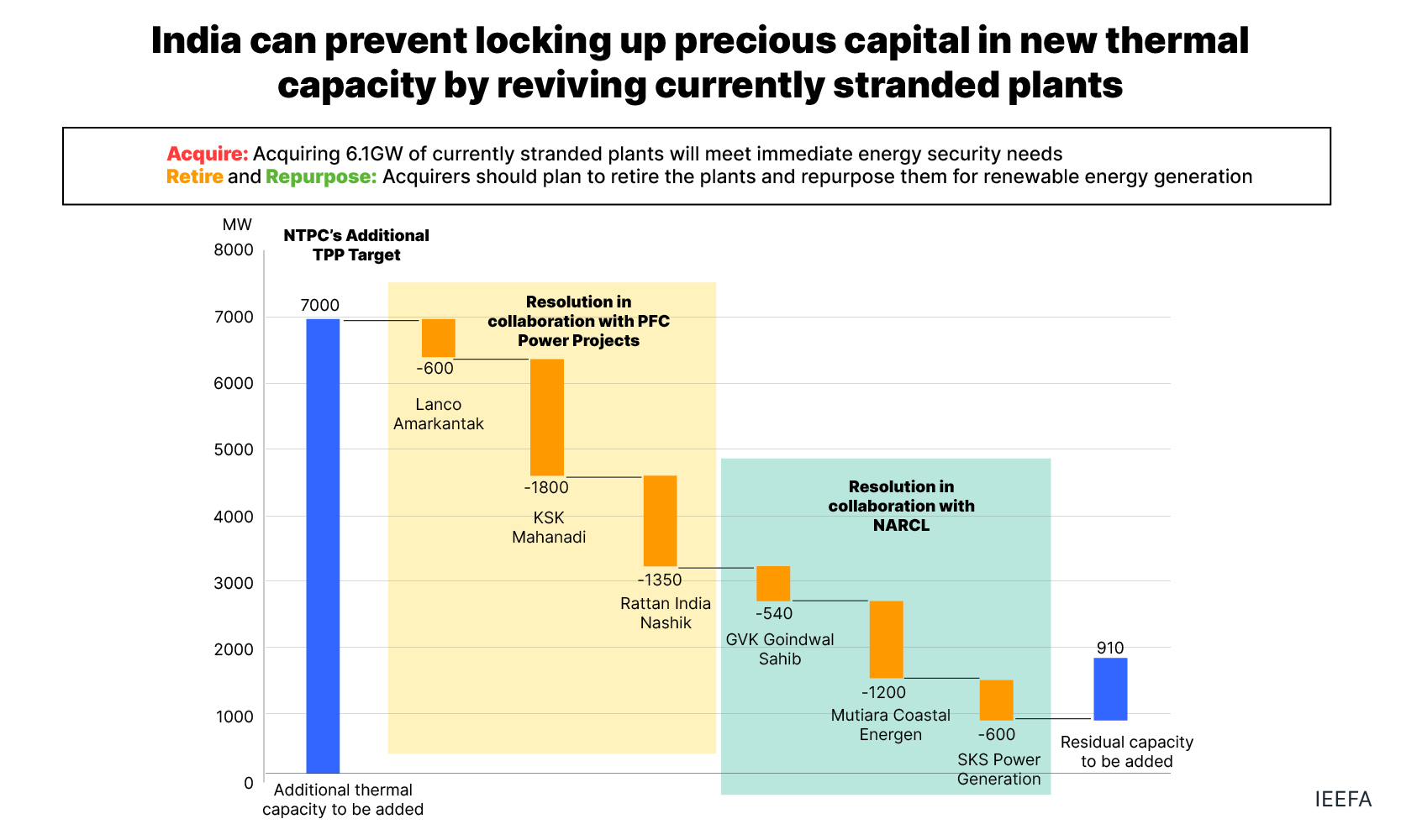
- The Stranded Asset Trap: 2026 has shown us the sheer scale of the financial cliff. India’s coal plants are worth roughly ₹11 lakh crore ($131 billion). Underused coal assets have climbed from ₹3.9 lakh crore in early 2026 and could hit ₹8.1 lakh crore by 2047 as solar takes over. Since public banks fund most of this—pouring about $10.6 billion a year into coal—the risk belongs to everyone. If the state has to bail out these banks, it’ll drive up inflation and tank the Rupee.
The Human Cost: Jobs and Political Blowback
It’s not just about balance sheets. The talk in India has turned to the “Just Transition.” The coal industry isn’t just an energy source; it’s the only thing keeping the “Coal Belt” (Jharkhand, Chhattisgarh, and Odisha) alive.
Millions depend on these state mines. Because the government owns them, it also owns the risk of mass unemployment and riots. A private CEO can file for bankruptcy and walk away. A Prime Minister can’t just abandon entire states without a total political meltdown.
Key Takeaway: Carbon pricing isn’t a magic wand here. When the government is both the producer and the taxpayer, cutting emissions becomes a messy political and fiscal fight, not just a market adjustment.
The Policy Pivot: Moving Beyond Efficiency
To deal with these hurdles, India’s pushed its Carbon Credit Trading Scheme (CCTS) past the trial stage. It’s now the main way industries stay in line.
The old “PAT” scheme was about being slightly more efficient at the factory level. The CCTS is different. It looks at the whole sector’s emissions. This forces companies to think about total decarbonisation rather than just tweaking a few machines.
Private Giants vs. The State Legacy
This shift has created two different Indias. To hit the 500GW green energy goal, the state’s leaned on “National Champions” like Adani and Reliance. Now, we’ve got a dual-track system: old state firms stuck with dirty coal and social debt, while a few private players grab the profitable green contracts.
Investors have noticed. They’ve dumped shares in state coal giants and moved into private green firms.
Look at how a typical low-risk portfolio looks this year:
Markowitz Minimum Variance Portfolio (2026 Sample)
| Stock | Category | Portfolio Weight | Risk Profile |
|---|---|---|---|
| COALINDIA | State Coal | 0.00% | Massive risk of worthless assets and social unrest |
| ONGC | State Oil | 0.00% | Stuck with volatile global oil prices |
| NTPC | State Energy | 6.90% | Surviving because it’s pivoting fast to solar |
| IOC | State Oil | 9.22% | Too much invested in old refineries |
| TATAPOWER | Private Green | 19.64% | Safe bet; huge private renewable pipeline |
| SJVN | State Green | 11.71% | Solid; handles hydro and solar without the coal baggage |
EU Rules vs. Local Reality: The Trade War
While India’s trying to fix its internal plumbing, Europe’s adding pressure. The EU’s Carbon Border Adjustment Mechanism (CBAM) is now in full swing. It’s a tax on dirty imports like steel and aluminium to stop “carbon leakage.”
The grace period ended in late 2025. Now, in 2026, the bills are coming due. Indian exporters are facing massive tariffs based on EU carbon prices of €70–€80 per tonne. This could kill the profit on $8 billion worth of trade.
New Delhi sees this as “Green Protectionism.” By punishing countries that still need coal to build basic infrastructure, the EU’s ignoring the UN rule of “Common But Differentiated Responsibilities.” It feels like the West is using trade laws to make the Global South pay for a climate crisis the West started decades ago.
The Value Gap: Global Carbon vs. Local Air
There’s a huge flaw in how we price the environment. We’ve turned carbon into a global currency. But we’ve ignored the local stuff—the air we breathe and the soil we farm.
- Global Issues (Climate): A ton of CO₂ from Mumbai warms the planet just as much as a ton from Munich. It’s a big, abstract problem for diplomats.
- Local Issues (Smog and Soil): When a coal mine ruins a water table or chokes a city, the people living there feel it immediately.
The Crisis in the North
The winter smog in the Indo-Gangetic Plain has returned with a vengeance in late 2026. While global bankers argue over carbon credits, people in Delhi are literally gasping for air.
- Dead Soil: Coal mining has wrecked over 18,000 hectares of land in India. Much of it’s buried under waste, killing off any chance of farming.
- Empty Promises on Air: The National Clean Air Programme (NCAP) is struggling. Of the ₹13,415 crore set aside, only 74% has been spent. Worse, most of that money goes to cleaning road dust, while the actual industrial smoke gets ignored.
- The Invisible Forest: India’s forests provide services worth $2.5 trillion a year. They filter water and cool the air. But because that’s not on a GDP chart, we keep cutting them down for factories.
Key Takeaway: By chasing carbon targets to please the EU, developing nations might be ignoring the immediate ecological collapse—poisoned water and unbreathable air—that could wreck their economies long before the climate does.
What Happens Next?
To fix the sovereign paradox, India needs more than just a carbon price. It needs “green accounting.” Thanks to new SEBI rules, companies are finally starting to report their environmental impact.
Still, until clean air and fertile soil are worth more than a quick buck from a coal mine, the transition will be lopsided. A real “green” move isn’t just about satisfying a trade deal in Brussels; it’s about making sure the local environment can actually support the people living in it.
Summary of Key Insights
India’s state-owned energy sector makes Western carbon taxes ineffective, as the government essentially taxes itself. While private giants lead the green shift, the state inherits the “brown” liabilities and social risks. Global carbon pricing overlooks immediate local crises—like toxic smog and soil death—that threaten long-term domestic stability.
Never Miss an Update!
Subscribe to get personalized blog recommendations and instant notifications for new articles directly on your device.