Methane, Monsoons, and the Carbon Balance: The Environmental Blindspot of India’s E20 Ethanol Drive
By the middle of 2026, India’s energy transition has reached a landmark moment. The nation successfully met its ambitious target of 20% ethanol-blended petrol (E20) across retail outlets, accelerating past its original 2030 timeline. Total ethanol procurement soared from a modest 38 crore litres in 2013-14 to a projected 1,200 crore litres for the 2025-26 Ethanol Supply Year (ESY), expanding national blending rates from 1.53% to 20% in just over a decade.
From a macroeconomic perspective, this transition represents a triumph of energy security, import bill reduction, and industrial scaling. Yet, from a biogeochemical and ecological perspective, a critical blindspot remains unaddressed: the lifecycle carbon and water footprint of grain-derived ethanol.
While public discourse frequently celebrates ethanol as a carbon-neutral alternative to fossil petrol, the biophysical reality is far more complex. The reliance on flooded rice paddies as a primary feedstock creates severe environmental tradeoffs, driven by high methane emissions, rapid groundwater depletion, and toxic industrial effluent risks.
1. The Feedstock Pivot: Rice Overtakes Maize in the E20 Fuel Mix
India’s National Policy on Biofuels was constructed around feedstock diversification—spanning sugarcane derivatives (B-heavy/C-heavy molasses, sugarcane juice), damaged food grains, maize, and surplus rice managed by the Food Corporation of India (FCI). However, recent operational shifts reflect deep structural volatility across domestic agricultural supply chains.
The political economy of Indian agriculture underwent a major realignment between 2024 and mid-2026. To mitigate domestic food inflation and stabilize domestic sugar inventories, the Indian government placed strict caps on diverting sugarcane juice and primary syrup to ethanol production. Concurrently, maize-based ethanol hit a sharp cost bottleneck: domestic maize prices spiked following surge demands from the poultry industry alongside localized outbreaks of the invasive fall armyworm (Spodoptera frugiperda). Distilleries were consequently forced to pivot en masse toward grain alternatives—principally FCI surplus rice and broken starch stocks.
Cumulative data through Q3 2026 for the 2025-26 Ethanol Supply Year underscores this dramatic reallocation. While sugarcane-based ethanol production stagnated at 320 million litres, grain-based distilleries experienced a sudden realignment:
- Maize-based ethanol output crashed by 45% in recent monthly cycles down to 210 million litres.
- Surplus rice procurement surged by 54%, supplying 340 million litres, alongside a 25% rise in broken/damaged rice usage (50 million litres).
- Overall monthly production dipped 4%, leaving distilleries struggling to maintain continuous target volumes without relying on staple grains.
Strategic Takeaway: The volatile shift toward rice-grain ethanol highlights an uncomfortable reality: India’s biofuel mandate is increasingly tethered to heavy water-consuming staples. Replacing fossil fuels with grain-based ethanol shifts the environmental burden from urban vehicle exhausts directly into vulnerable agrarian ecosystems.
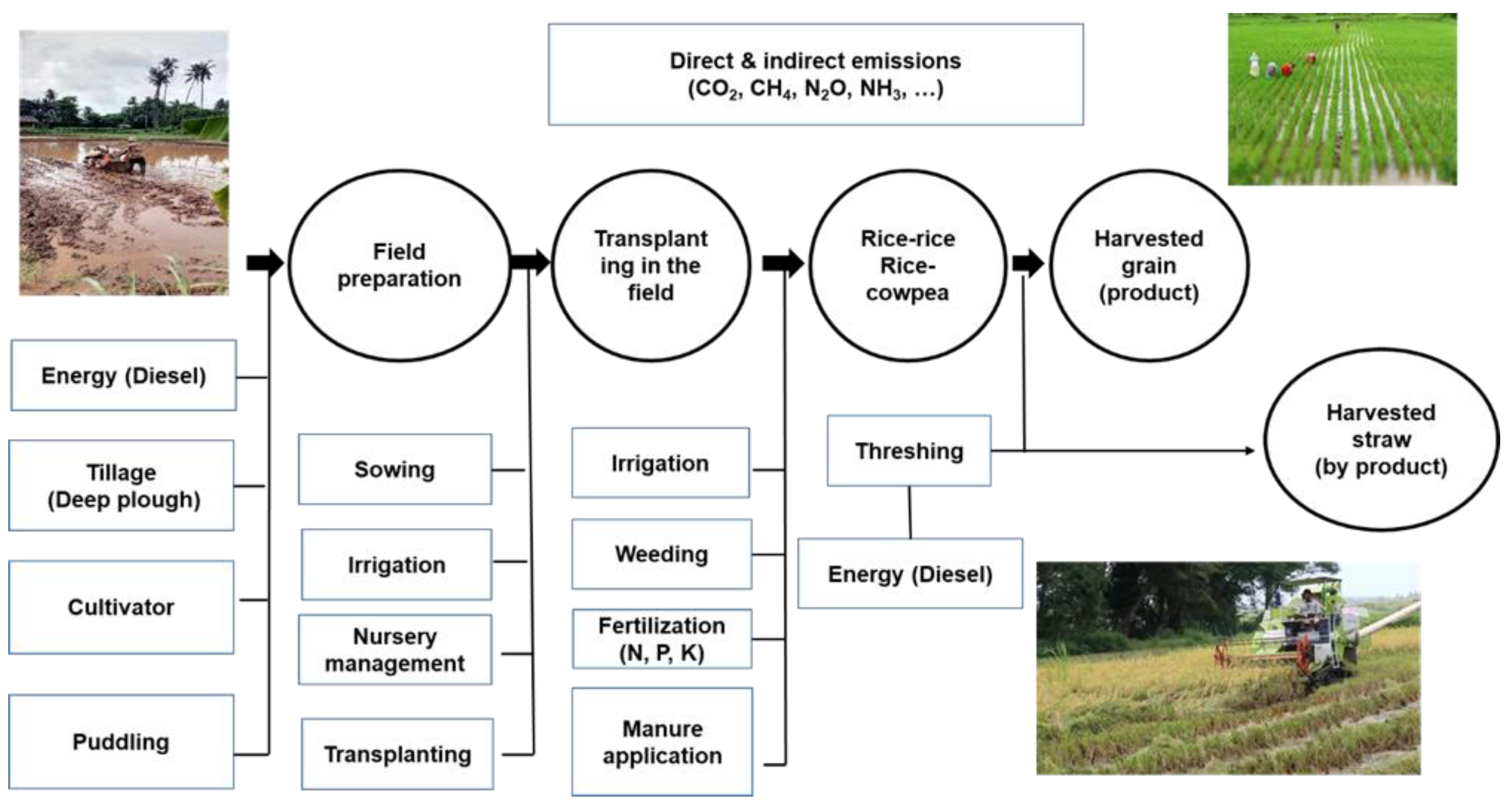
2. The Biogeochemical Blindspot: Paddy Methane and Life Cycle Assessments
The fundamental claim that ethanol is inherently carbon-neutral rests on an oversimplified equation: the carbon dioxide (CO₂) emitted during combustion equals the CO₂ absorbed by plants during photosynthesis. This math collapses when applied to continuously flooded rice paddies.
The Anaerobic Methane Problem
Conventional rice cultivation relies on continuous flooding, creating anaerobic (oxygen-deprived) conditions in the soil. These conditions provide an optimal environment for methanogenic archaea, which break down organic matter and generate methane (CH₄).
- Flooded paddy fields generate approximately 11% of all global agricultural methane emissions.
- In India, rice cultivation accounts for 20% of total national methane emissions.
- Methane is a potent short-lived climate pollutant with a Global Warming Potential (GWP) 80 times greater than CO₂ over a 20-year timescale (and 28–36 times greater over a 100-year horizon).
Life Cycle Assessment (LCA) Disparities
Life Cycle Assessment (LCA) methodologies evaluate emissions across the entire supply chain—from field management and synthetic fertilizer inputs to distillation, transport, and combustion. Crucially, to evaluate the true ecological return of E20, biofuel carbon intensities must be compared directly against the conventional fossil benchmark.
| Feedstock / Energy Source | Estimated Water Footprint (Liters of Water / Liter of Ethanol) | Lifecycle Net GHG Intensity (kg CO₂e per liter) | Primary Environmental Risk Factor |
|---|---|---|---|
| Conventional Petrol (Unleaded Baseline) | ~0 L (Direct Agricultural) | +2.30 to +2.50 kg | Upstream extraction, refining intensity, fossil carbon release |
| Rice (1G Grain) | ~10,790 L | +0.81 kg | High methane (CH₄) emissions, severe aquifer drawdown |
| Maize / Corn (1G) | ~4,670 L | -0.19 kg | Nitrogen leaching, runoff from synthetic fertilizers |
| Sugarcane (1G) | ~3,630 L | -1.61 kg | High crop water demand; net-negative due to bagasse co-gen energy |
| Crop Residue (2G Straw) | Minimal cultivation footprint | Significantly negative baseline | Processing cost, seasonal biomass supply-chain logistics |
A rigorous baseline comparison illuminates the central paradox: sugarcane ethanol achieves a strongly net-negative emissions profile (-1.61 kg CO₂/L) because processing plants burn residual sugarcane bagasse to generate off-grid green electricity and steam. By contrast, rice ethanol emits a net positive +0.81 kg CO₂/L. While this appears lower than petrol’s +2.30 to +2.50 kg CO₂/L, the margin narrows dramatically once uncounted agricultural methane, heavy groundwater pumping energy, and nitrogenous fertilizer degradation are fully factored into regional carbon budgets.
3. Water Stress and the Threat of Vinasse Runoff
Beyond greenhouse gas dynamics, crop-based ethanol production places immense pressure on hydrological systems. Evaluating this threat requires distinguishing between Green Water (absorbed rainwater) and Blue Water (surface water and pumped groundwater extracted for irrigation).
Of the staggering 10,790 liters of water required to produce a single liter of rice ethanol, approximately 3,400 liters consist of extracted Blue Water. In India’s primary agricultural belts—Punjab, Haryana, and Western Uttar Pradesh—this extraction relies heavily on deep tubewells drawing from overexploited alluvial aquifers. Diverting groundwater to produce transport fuel effectively exports precious freshwater from vulnerable food bowls into automotive fuel tanks.
Industrial Wastewater: The Vinasse Challenge
The environmental burden extends beyond field cultivation to the distillation plant. The distillation process yields substantial volumes of highly acidic, organic-rich wastewater known as vinasse (or spent wash). For every liter of ethanol produced, distilleries generate 8 to 15 liters of vinasse.
- Raw distillery wastewater exhibits extremely high Biological Oxygen Demand (BOD: 45,000–60,000 mg/L) and Chemical Oxygen Demand (COD: 90,000–120,000 mg/L), alongside elevated concentrations of heavy metals and corrosive salts.
- Uncontrolled discharge or excessive application in “fertigation” leads to soil acidification, root toxicity, and the leaching of heavy metals into local aquifers.
- The Ministry of Petroleum and Natural Gas has mandated that all grain and molasses distilleries maintain Zero Liquid Discharge (ZLD) systems, forcing facilities to treat, recycle, and re-use process water via multi-effect evaporators and incineration boilers.
Strategic Takeaway: While Zero Liquid Discharge (ZLD) regulations exist on paper, maintaining continuous compliance across hundreds of operational facilities remains a major monitoring challenge. Inadequate wastewater handling poses a direct threat to rural freshwater systems and soil fertility.
4. Mitigation Strategies: Agronomic Innovation and the Shift to 2G/3G Biofuels
To resolve the conflict between food security, water scarcity, and carbon reduction, India’s agricultural and energy sectors are deploying agronomic interventions and advanced fuel technologies.
Agronomic Solutions: SRI and AWD
Rather than abandoning rice, transition strategies focus on altering cultivation parameters:
- Alternate Wetting and Drying (AWD): By replacing continuous flooding with periodic drying intervals, soil conditions shift from anaerobic to aerobic. This inhibits methanogenic bacteria, cutting methane emissions by 45% to 50% and reducing agricultural blue-water consumption by up to 30%.
- System of Rice Intensification (SRI): SRI practices raise crop yields from 4.8 tons to 7.6 tons per hectare (a 58% increase) while reducing water usage and overall GHG emissions per kilogram of grain produced.
- Microbial Interventions & Biochar: Applying methane-oxidizing bacteria (methanotrophs) alongside porous biochar improves soil aeration, cutting methane emissions by 31.51% while increasing grain yields by 7.07%.
Advanced Biofuels: 2G Realities and Supply-Chain Bottlenecks
The structural solution to the food-vs-fuel debate lies in transitioning away from 1G edible crops entirely toward Second-Generation (2G) lignocellulosic feedstocks (rice straw, agricultural stubble, sugarcane bagasse) and Third-Generation (3G) algal biomass.
However, scaling 2G technologies—such as Indian Oil Corporation’s flagship 2G refinery in Panipat, Haryana—has proven exceptionally difficult due to real-world biomass supply chain logistics.
Northern Indian farmers face a narrow 20-day window between the autumn rice harvest and the winter wheat sowing season. Aggregating, baling, transporting, and storing vast quantities of low-density rice straw to feed a 2G facility operating 365 days a year represents a massive operational bottleneck. Without localized biomass aggregation hubs and specialized baling equipment, refineries face seasonal feedstock shortages and high procurement costs.
To bridge this gap, the Centre extended the Pradhan Mantri JI-VAN Yojana through 2028-29, providing Viability Gap Funding (VGF) and guaranteed higher purchase prices (₹60–65 per liter for 2G vs. ₹50–55 per liter for 1G) to offset complex pretreatment and enzyme costs.
5. Vehicle Compatibility and Engine Realities: The Efficiency-Emissions Feedback Loop
As E20 fuel becomes standard across Indian retail outlets in 2026, vehicle engine compatibility has emerged not merely as a consumer maintenance issue, but as a direct environmental driver that impacts real-world emissions assessments.
While vehicles manufactured after April 2023 are engineered specifically for E20 compatibility—featuring anti-corrosive fuel lines, synthetic rubber seals, and recalibrated Engine Control Units (ECUs)—India’s vast legacy fleet (vehicles produced prior to 2020) remains vulnerable to ethanol’s hygroscopic nature (its property of absorbing atmospheric moisture).
When legacy vehicles run on high-blend ethanol without ECU recalibration, phase separation causes severe operational inefficiencies:
- Lower Volumetric Energy Density: Ethanol contains roughly 33% less energy per unit volume than petrol, resulting in a 3% to 6% reduction in fuel economy if engines cannot optimize combustion timing.
- Incomplete Combustion Spikes: Lean-burn misfires caused by water-contaminated fuel increase tailpipe releases of unburnt hydrocarbons (HC), volatile organic compounds (VOCs), and toxic acetaldehydes.
- Catalytic Converter Degradation: Incomplete combustion elevates exhaust temperatures, accelerating catalyst degradation and releasing excess nitrogen oxides ($NO_x$) into urban airsheds.
Retail fuel sampling conducted across metro hubs in August 2026 confirmed that oil marketing companies have maintained strict water-content tolerances at the pump. However, when un-adapted legacy fleets burn E20 inefficiently, the resulting spike in real-world tailpipe pollutants offsets a portion of the clean-burning carbon benefits calculated in theoretical LCA models.
A Way Forward for India’s Biofuel Strategy
India’s rapid transition to E20 blending demonstrates impressive industrial execution and policy momentum. Yet, maintaining long-term sustainability requires moving beyond simple volumetric targets. Evaluating biofuels purely on liters produced ignores the underlying carbon, water, and atmospheric balance.
To build a genuinely sustainable bioeconomy, India’s policy framework must align energy goals with agricultural realities:
- Mandate Sustainable Agronomic Practices: Tie financial incentives and procurement pricing for grain-based ethanol directly to verifiable farm practices like Alternate Wetting and Drying (AWD) and SRI.
- Overhaul 2G Supply Chain Infrastructure: Deploy Viability Gap Funding specifically for mechanized biomass aggregation hubs, baling equipment, and localized storage depots to resolve the 20-day stubble collection bottleneck.
- Enforce Strict Environmental Standards: Maintain transparent, real-time remote monitoring of Zero Liquid Discharge (ZLD) compliance across all industrial distilleries to protect regional groundwater systems.
Only by addressing methane emissions and water extraction at the farm level can India’s biofuel roadmap deliver true ecological and energy security.
Summary
- E20 Hits Trade-Offs: Reaching the 20% ethanol target in 2026 forced a turn toward surplus rice, sparking acute ecological strain across farm belts.
- Methane & Water Burden: Rice paddies emit heavy methane and draw ~10,790 litres of water per fuel litre, shrinking net emissions gains over petrol.
- Logistics & Engines: Scaling 2G ethanol requires fixing tight 20-day stubble collection windows, while legacy vehicle misfires threaten urban air quality.
Never Miss an Update!
Subscribe to get personalized blog recommendations and instant notifications for new articles directly on your device.